Thursday, October 1, 2015

The "Hares"


I want to start by saying that these are personally two of my favorite Air Jordan Silhouettes 
ever made. The top is the Air Jordan 8 Bugs Bunny and the bottom is the Air Jordan 7 Bugs
Bunny. Now the interesting thing about these 2 (not to mention the Air Jordan 1 version)
is that they are dubbed as the "Hare" Jordans because of their color scheme which is based
off of the beloved Looney Tunes character Bugs Bunny. He joined forces with Michael Jordan
back in the early 90's in commercials for the shoe to defeat their enemy known as Marvin
the Martian. I have to admit that I am a sucker for a good play on words. I realize that this has
 nothing to do with hair, yet seeing as these are something that greatly interest me, I felt it both appropriate and interesting that the names of these two shoes would be the "Hares".

Wednesday, September 30, 2015

Hippest Old Man


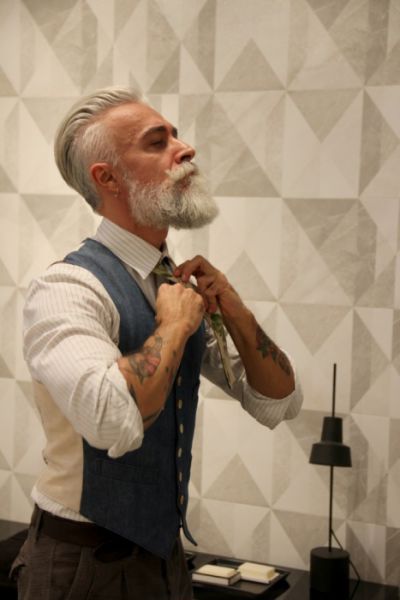
Not to long ago, on my online trek through the wonders of Facebook articles, I encountered an article that displayed several pictures of old men "hipsters." After reading the article and looking at the pictures the picture that caught my attention and related to the class was this picture right here. I really don't know what gets me to say wow this old dude is really cool. Is it his clothing? His tattoos? Or is it his hair? (Which by the way is pretty on point).

In regards to how this picture relates to the class, I just found it interesting learning how hair can represent one's individuality. In this case this "old man's" hairstyle illustrates that he may be old but he definitely pulls off the trendsetter/debonair style for himself.

Sunday, September 27, 2015

REACTIONS TO RACHEL DOLEZAL- What's Hair Got to Do with It?


Earlier this summer, the story around NAACP leader Rachel Dolezal, president of the NAACP chapter in Spokane, Washington, was at the center of much controversy when it was revealed that Dolezal, who has both identified as a black woman and claimed to have been victim of hate crimes, is in fact white. 

Dolezal's "white" lie (pardoning the pun) left many bewildered, including Dolezal herself, who when interviewed by media outlets couldn't understand what, exactly, she'd done wrong.
Reactions to Dolezal's story continue to run the gamut. While on the one hand many seem amused by her attempts to "pass" as a black woman, on the other there are those who note that her case suggests much more than the ways in which cultural appropriation has become an acceptable practice in our country. In fact, her case, allows for discussions about notions of passing, black womanhood, racial identity and white privilege, among others. At the top center of Dolezal's story is her hair: "natural" sometimes, braided or dreadlocked on other occasions.

The following tweets (posted on thehuffingtonpost.com by 06/12/2015 5:31 pm EDT) deal with passing and, specifically, with Dolezal's hair. A couple of questions to consider:
  1. What about Rachel's hair becomes important when discussing issues of racial identity and passing? 
  2. Could Rachel Dolezal have gotten away with her impersonation of an African-American woman had her hair been different? 
  3. What types of stereotypes did her hair both rely on and further promote in the process?

Posted: Updated: 

Sunday, June 12, 2011

Nun Pulls Car with Hair

I thought this video was interesting because we discussed the symbolic meaning of hair in class.

This video shows the power of a nun's hair...literally.


Saturday, June 11, 2011

The Fabric of Faith or the Commodification of Faith?

Dear All,

One of your classmates has asked me to post this for you. Thanks you, Armando!

Consider the following question: Are there any foreseeable advantages/disadvantes to the commodification of the veil?

http://www.youtube.com/watch?v=dbK_QOXPV3s&feature=player_embedded#at=95

Thursday, June 9, 2011

The Simpsons: On Gray Hair

Below is the episode on The Simpsons where Marge decides to stop dying her hair blue. She comes back home, and her entire head of hair is gray. Of course, this sparks a variety of reactions to her hair. Lisa finds it liberating. Children see her as a grandma. Some women scoff. Near the end of the episode, as Marge is on her way to a party to see Homer, several things happen to her and she ends up looking like a witch. By the very end, she decides to dye her hair blue again. What messages does this episode send?

One group during our class presentations pointed out that while gray hair symbolizes wisdom for men, the same positive symbol is not seen with women who have gray hair. Why is this so?

The important scenes are at 6:51, 11:10, 11:40, 12:20, 15:22, 16:40, 19:20. Enjoy!

Monday, June 6, 2011

Eastern Freedom Western Bathing??

This image is brought to you by one of your classmates. Thank you, Kyle!

Considering what we discussed in class about veiling and feminism, the image below makes clear not only that there are as many definitions of freedom as there are of femininity (and masculinity, of course), but also the importance of understanding the choices that we make. Are they really choices or have we been culturally conditioned to believe they are? Who is setting the standards? Who is making up the rules?